From idea to production: six software services every growing business needs
Growing companies rarely need “just an app.” They need the right mix of custom software, mobile, SaaS architecture, integrations, AI and dependable support. Here is how those services fit together from idea to production.
Start with the business outcome, not a feature list
A software project becomes expensive when the team starts by collecting screens and features instead of defining the result. The real brief is usually operational: reduce order-processing time, give field staff a reliable mobile workflow, replace spreadsheets, launch a subscription product, or connect systems that currently require manual re-entry. Once the outcome is measurable, the right service mix becomes much easier to choose.
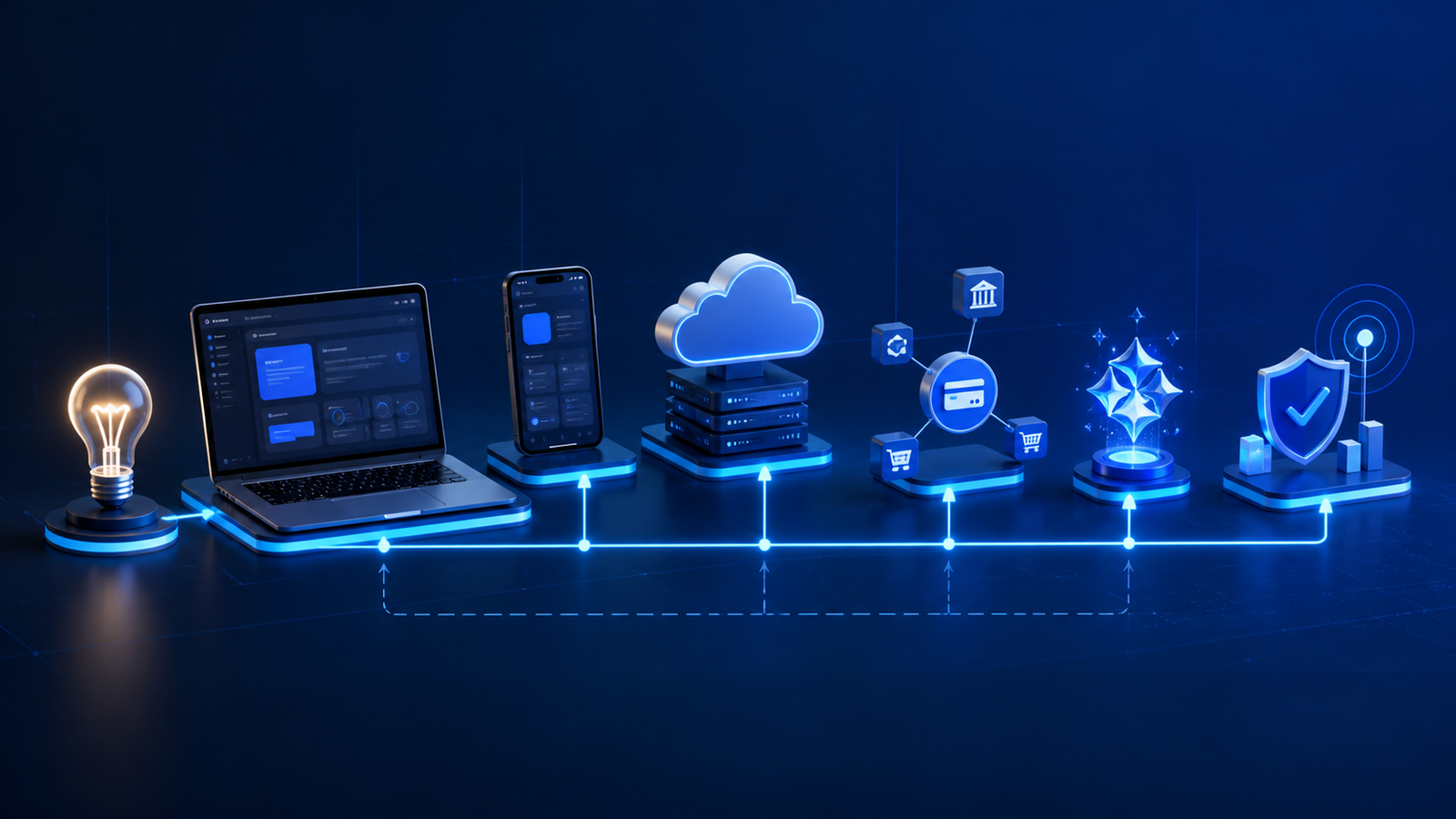
Most growing businesses do not need six separate vendors. They need one engineering partner capable of moving between product design, platform architecture, integrations and operations without losing context. The six services below form that path from the first decision to a dependable production system.
Custom software development for workflows that make you different
Off-the-shelf tools are excellent when your process is standard. They become restrictive when the workflow itself is your advantage or when five generic tools must be forced together. Custom software development is the right choice for internal ERPs, booking engines, customer portals, marketplaces and operational systems that must reflect how the business actually works.
A strong custom build begins with written scope, user roles, data ownership and acceptance criteria. It should include staging, automated deployment, monitoring and documentation from the start—not as cleanup before launch. Weekly working-product demos keep decisions grounded and expose misunderstandings while they are still inexpensive to fix.
Mobile app development for work and customers on the move
A mobile application is valuable when it uses the strengths of the device: camera, location, notifications, offline storage and fast access in the field. Mobile app development is not simply shrinking a website. The interaction model, network conditions and release process are different.
Choose cross-platform development when Android and iOS share most workflows and native development when deep device integration or platform-specific performance matters. In both cases, budget for store listings, review cycles, analytics, crash reporting and operating-system updates. Shipping version one is only the beginning of a mobile product.
SaaS platform engineering for repeatable growth
A SaaS product must serve many customers without turning every customer into a separate deployment. SaaS platform engineering covers the foundations that ordinary web development often postpones: tenant isolation, plans and subscriptions, self-service onboarding, usage limits, per-tenant configuration and safe upgrades.
These choices are difficult to retrofit after sales begin. A production-ready SaaS architecture also needs audit trails, observability, background processing, reliable migrations and a deployment strategy that does not interrupt paying customers. The objective is not theoretical scale; it is predictable operation as the product, data and customer base grow.
API, payment and logistics integrations that survive real-world failures
Modern products depend on gateways, shipping providers, CRMs, KYC services, messaging platforms and government systems. The visible API call is the easy part. API, payment and logistics integrations become production-grade when they handle timeouts, duplicate webhooks, retries, reconciliation and partial failure.
Payments require a complete money lifecycle: authorization, capture, settlement, refund and matching the gateway report to internal orders. Logistics integrations must cover rates, labels, tracking events, failed delivery and COD remittance. Every external system should be wrapped behind a clear internal interface so a provider can change without rewriting the product.
Practical AI integration where it earns its place
AI is most useful when it removes a repeated bottleneck or makes an existing workflow easier. Practical AI integration can improve support triage, multilingual search, document summarization, content workflows, voice booking and internal copilots. It should not be added simply because every roadmap now has an AI line item.
Good implementations define what the model may do, what needs human review and what happens when confidence is low. They log inputs and outputs appropriately, protect sensitive data and keep the provider replaceable. The measure of success is not that the model produced an impressive answer; it is that the overall process became faster, safer or more useful.
Maintenance and long-term support that protects the investment
Software changes even when the feature list does not. Browsers, mobile operating systems, payment rules, security advisories and third-party APIs keep moving. Maintenance and long-term support provide monitoring, dependency upgrades, security patches, backups, incident response and a predictable stream of improvements.
A useful support agreement defines response priorities, ownership, release cadence and what is monitored. It also creates space for small operational improvements that are easy to postpone but compound into a much better product. Launch is a milestone; dependable operation is the actual return on the investment.
Choose the engagement model that matches the uncertainty
A fixed scope works well when workflows and acceptance criteria are understood. A discovery phase is better when the team still needs to validate users, integrations or architecture. A retained product team suits a roadmap that will evolve continuously. The wrong commercial model creates pressure to pretend uncertainty does not exist; the right one makes uncertainty visible and manageable.
Before signing, ask who will write the code, how often you will see working software, how changes are approved, who owns deployment and documentation, and what happens after launch. Clear answers matter more than a long technology list.
A practical software-partner checklist
- Can the team connect its recommendation to a measurable business outcome?
- Will you see working software regularly, not only status presentations?
- Are security, testing, monitoring and deployment included in the definition of done?
- Does the team have production experience with mobile stores, SaaS operations and external integrations?
- Can it explain when AI is useful—and when a deterministic workflow is safer?
- Is post-launch ownership defined before development begins?
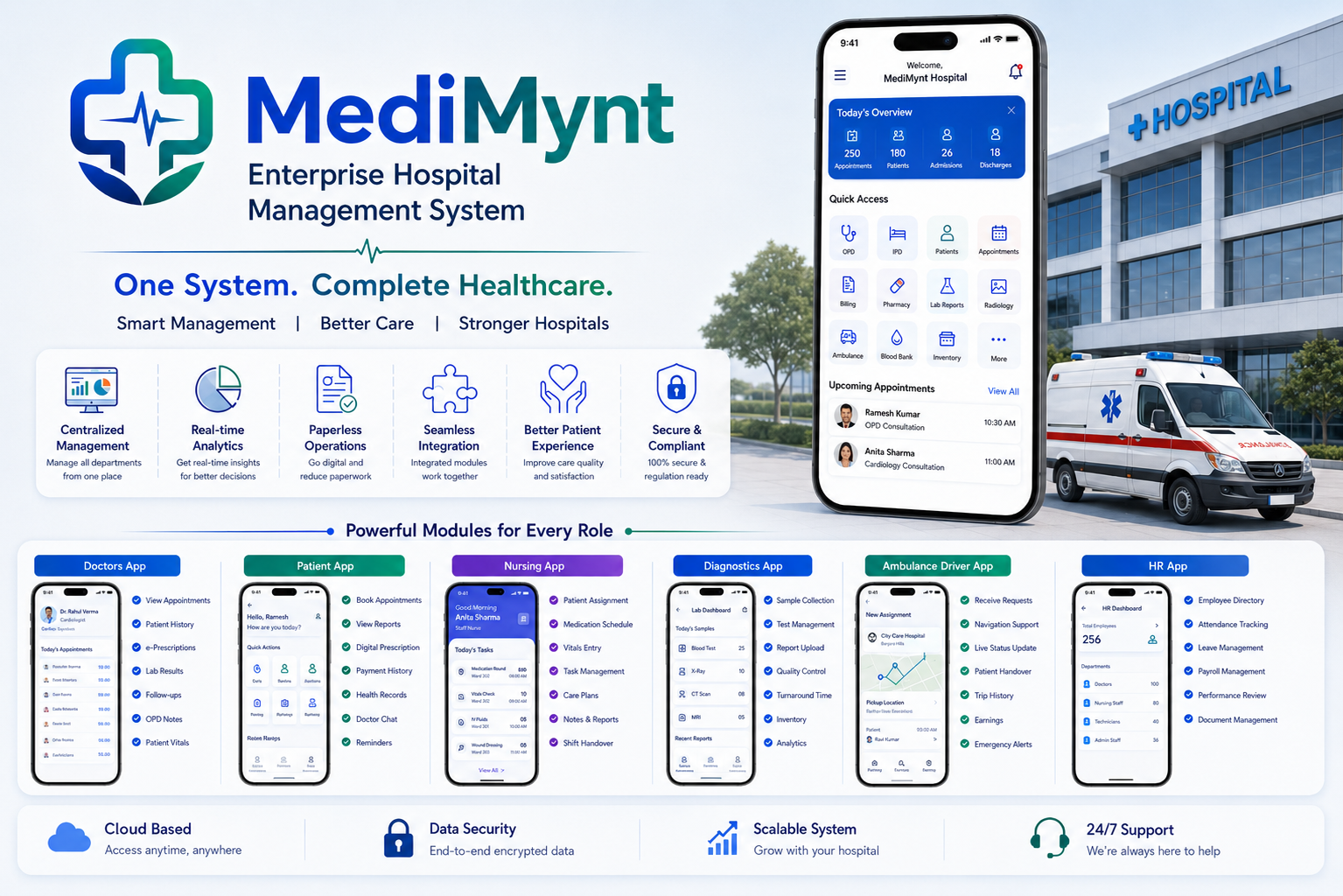
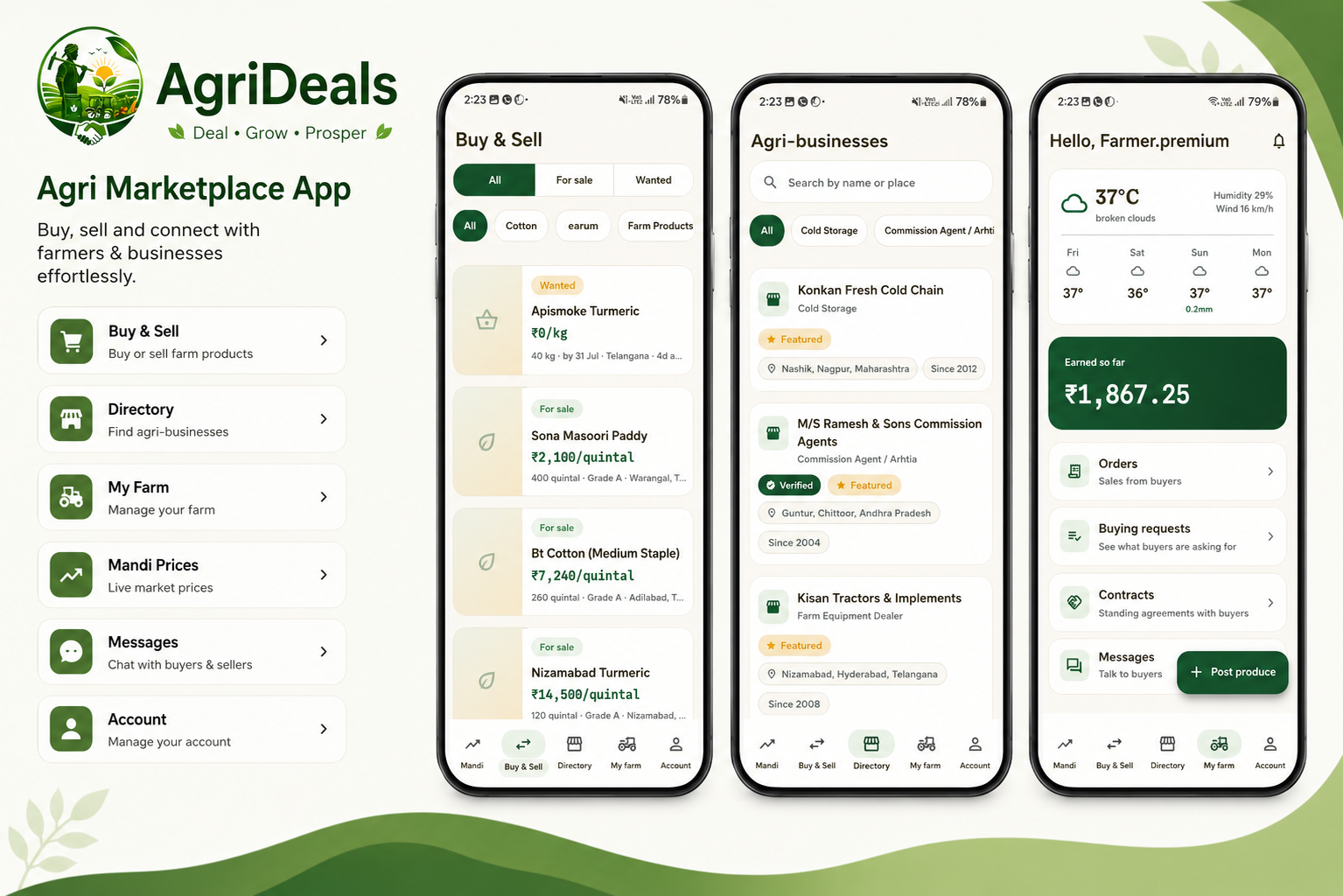
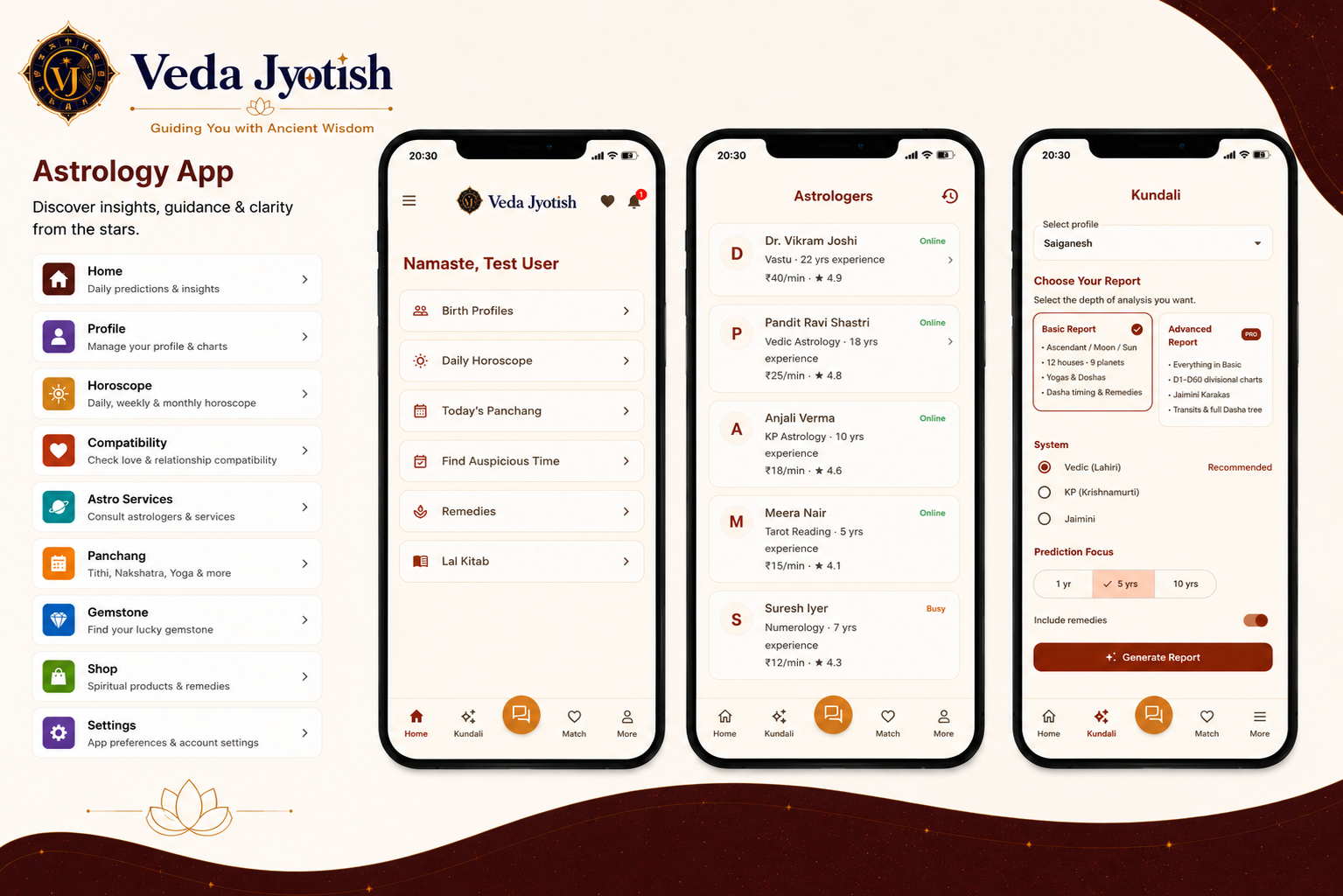
CodeMynt designs, builds and operates its own products across commerce, travel, surveys, civic technology, matrimony, astrology, agriculture and healthcare. We bring the same production discipline to client work. Tell us what you are building, and we will help identify the smallest service mix that can deliver the outcome.
Questions answered
Frequently asked
Which software development service should a growing business start with?
Start with the business outcome and the biggest operational constraint. A short discovery phase can then determine whether custom software, mobile, SaaS engineering or an integration-first approach is the smallest sensible investment.
Can one team handle web, mobile, integrations and ongoing support?
Yes. A single accountable product team often reduces handoffs and duplicated discovery. Check that the team has real production experience across each required area and clearly defines ownership after launch.
When should AI be included in a software project?
Include AI when it measurably improves a workflow such as support triage, search, summarization, multilingual content or voice interaction. Define human review, fallbacks, data protection and success metrics first.